Bhaktapur Durbar Square: History
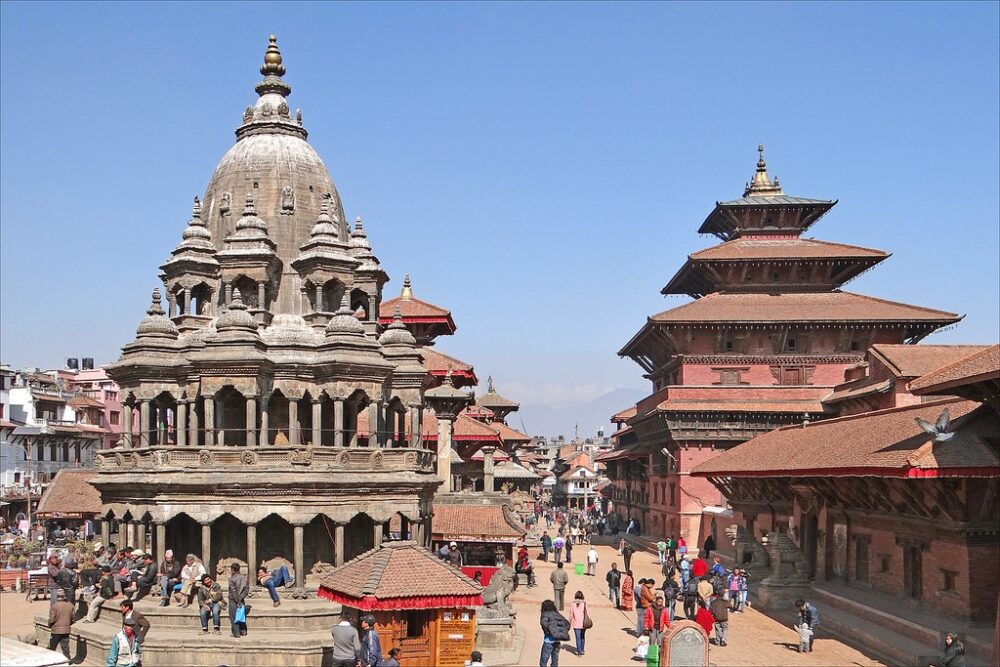
Bhaktapur, sometimes called Khwopa, is a city of devotees. It is well-known for its outstanding culture, traditional way of life, and fine art. 16 kilometers to the west of Kathmandu, the capital city, sits Bhaktapur Durbar Square. It is located at an elevation of 1400 meters above sea level and covers an area of 6.88 square kilometers. Tourists can easily spend several days in Bhaktapur studying about the Newar people’s customs and traditions because the city is filled with old Hindu and Buddhist religious structures, royal mansions, and courtyards. In 1979, UNESCO designated Bhaktapur’s Durbar Square, also known as “Royal” Square, a World Heritage Site.
More than one-third of the ancient architectural monuments, such as temples, monasteries, and other structures, were destroyed in the 1934 earthquake. In spite of this, a lot of treasures remain. In 1934, a large earthquake occurred in the region, leveling over 2,000 dwellings totally and seriously damaging another 2,000. This earthquake caused about a thousand individuals to suffer. Many buildings have been restored to its previous splendor over time, largely due to initiatives supported by the United States and West Germany in the late 1980s and early 1990s, respectively. On April 25, 2015, a strong earthquake rocked the square once more.
The well-known Vatsala Devi temple in Bhaktapur Square, which was constructed completely of sandstone and featured gilded pagodas on top, was also demolished.
An Overview of the History of Bhaktapur
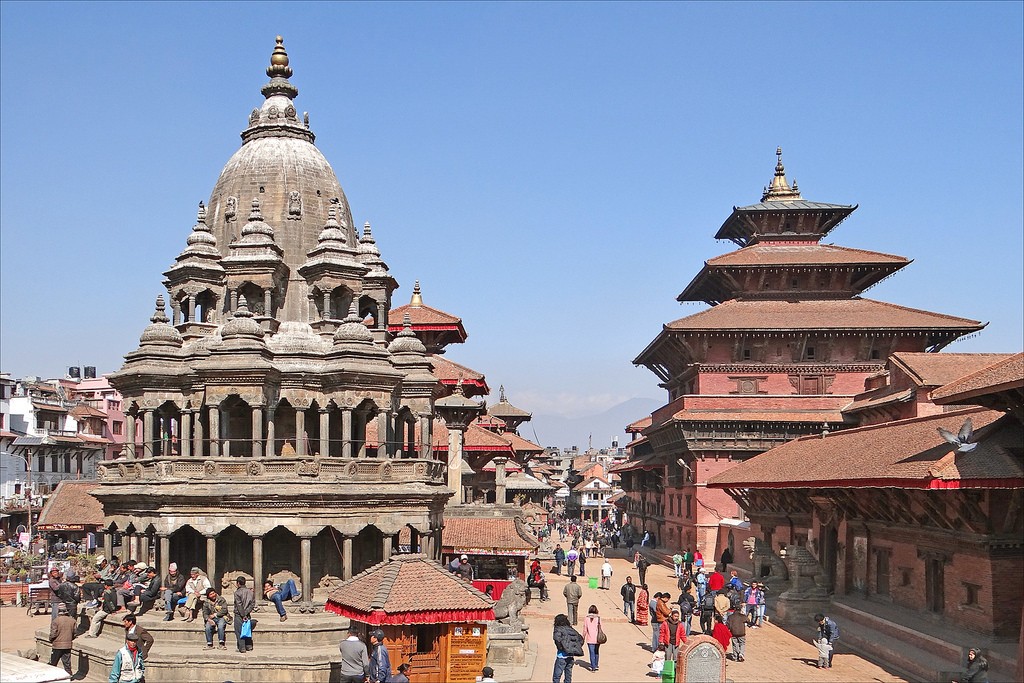
If I could go back in time, I would discover that Bhaktapur was at its most magnificent during the Malla era. There are several historical accounts that claim that King Ananda Malla built the town in the 12th century. Up until the fifteenth century, Bhaktapur was the capital of the Greater Malla Kingdom. Subsequently, the Greater Malla Kingdom evolved into a sovereign state that persisted until the 18th century. From 1663 to 1696, Jitamitra Malla controlled Bhaktapur. From 1696 to 1722, Bhupatindra Malla ruled until his death, and from 1722 to 1769, Ranjit Malla ruled till his death. The palaces and temples that are located in Durbar Square were built in large part by these kings.
The Gorkha dynasty was founded by Dravya Shah, whose son, Prithvi Narayan Shah, launched a campaign of conquest over the Kathmandu Valley in 1768. He intended to unite the lesser towns of the Kathmandu Valley under a single monarch by capturing Kathmandu, Patan, Bhaktapur, and others. Jang Bahadur Rana became the king of Nepal and seized power in 1846 following a period of unrest and a brutal coup.
Up until 1950, when the Congress Party installed a new government and overthrew the Ranas, his Rana kingdom dominated Nepal. After seizing power in 1960, King Mahendra banned political parties and replaced them with a panchayat government that did not permit political parties. Political instability continued well into the late 20th century.
Destinations in Bhaktapur: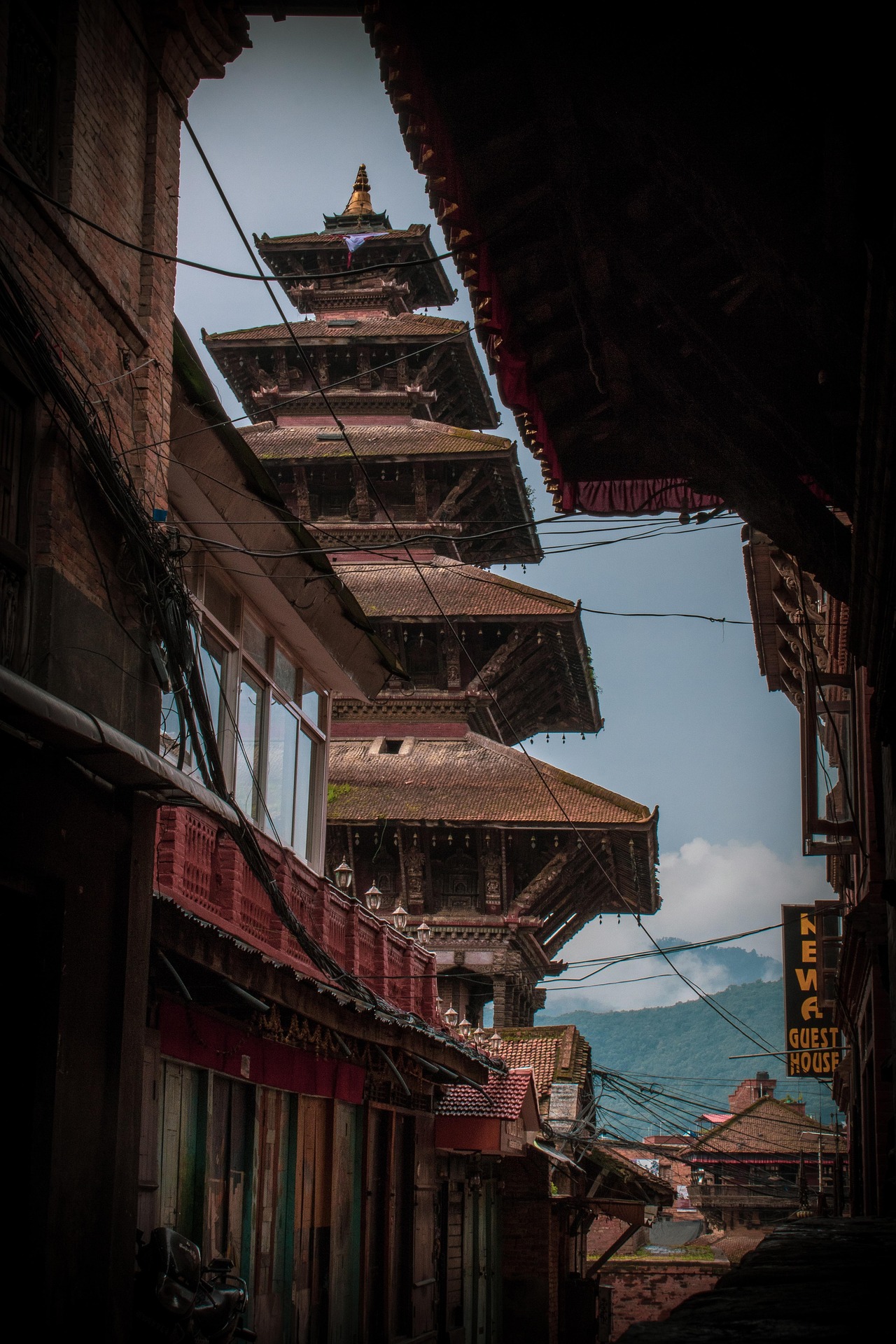
Top Destinations in Bhaktapur Durbar Square
Durbar Square, Taumadhi Square, Dattatreya Square, and Pottery Square are the four separate areas that make up Bhaktapur Durbar Square. The entire area is frequently referred to by its formal name, Bhaktapur Durbar Square.
55 Window Palace
The 55-Window Palace, which was the imperial residence prior to 1769, will be open for visitors to see. The National Art Gallery, which houses Buddhist paubha scroll paintings, palm leaf manuscripts, and stone carvings, among other artworks, is housed in the palace, which has elaborately carved windows and doors. During the 1696–1722 AD reign of Malla King Bhupatindra Malla, the Palace of Fifty-five Windows, also called the Pachapanna Jyale Durbar, was built.
The Complex of Taleju
The Golden Gate, the complex’s entryway, was constructed by King Ranjit Malla in 1754 AD and provides access to the Taleju Temple Complex. Because of its great religious, historical, archeological, and architectural significance, it is a source of pride for Nepal. At the very top of the door is the image of the revered Hindu goddess Kali, aided by two celestial nymphs and accompanied by a representation of the mythical bird Garuda. An illustration of the legendary bird Garuda can be seen beneath her. Below her are two nymphs, each of whom represents heaven.
Bath of royalty (Naga Pokhari)
The Royal Bath, which stands out due to its golden faucet, is another option. One of the most beautiful pieces of gilded copperwork ever made in the Kathmandu Valley is this one. On either side of the door frame are pictures of gods and goddesses, such as Bhagwati, Ganesh, Bhairav, Kumari, and Kali, along with a vase that symbolizes good fortune. A statue of the goddess Taleju is located directly over the room’s entrance. Sitting on a tortoise and a crocodile, she has ten arms and is assisted by Shri and Laxmi.
Taleju Bell: Bhaktapur’s Greatest Bell
Moreover, Durbar Square (1737 AD) is home to the Big Bell, an 18th-century structure constructed by Ranjit Malla, the last Malla king of Bhaktapur. It was rung to summon the town’s residents to meetings as well as to honor the Goddess Taleju. Today, it is dedicated to the Goddess Taleju and is rung twice daily. The Barking Bell is named after the sound it makes when it is rung, and it is located next to another bell.
The Vatsala Temple, which was dedicated to the goddess Vatsala Devi and had elaborate carvings, was built of stone. It was famous for its silver bell, which the locals called “the bell of barking cats” because the dogs in the neighborhood would scream and bark anytime it was rung. The bell remained intact despite the entire temple being devastated by the 2015 Gorkha earthquake.
Temple of Yaksheswor Mahadev
The plaza also has the Yaksheswor Mahadev Temple, which was constructed by Yaksha Malla in the fifteenth century. It was meant to have the appearance of the Pashupatinath temple in Kathmandu. There were sexually provocative engravings on the wooden beams.
Complex of Bhandarkhal
The area surrounding the plaza includes the following: the Bhandarkhal Complex, the Indrayani Temple, the Siddhi Laxmi Temple, the octagonal Chyasin Mandap, the Shiva Temple (Fasi-dega), the Vatsala Temple, the Balakhu Ganesh Temple, the Chatuhma Mahavihar, the Tripura-Sundari Temple, and the Char Dham.
The Phase Dega Temple is a Hindu temple of worship dedicated to Lord Shiva that offers breathtaking views of the city.
Taumadhi Square (famous Nyatapola Mandir): Built in 1702 over the course of five months by King Bhupatindra Malla of Nepal, the five-story Nyatapola Temple is a pagoda-style temple situated in Taumadhi Square. The Hindu deity Siddha Laxmi, who is revered at this temple, is regarded as the embodiment of prosperity and fortune. With a height of 108 feet (30 meters), this pagoda temple is the tallest of its kind in Nepal.
The struts, windows, doorways, and tympanums of this edifice are adorned with carved images of deities. Last pair of tantric deities, Singhini and Toyahagrini, are located in front of the temple ladder, along with a pair of elephants, a pair of lions, a pair of griffons, and others. These sculptures stand two meters tall and are composed of stone. At the front step, they display the well-known Rajput wrestlers Pata and Jaimal.
The smaller-scale pagoda temple dedicated to Lord Bhairab was built by King Jagat Jyoti Malla (1613–1637 AD). It was subsequently renovated into a three-story temple by King Bhupatindra Malla, who was a strong advocate for the arts. A golden bust of the dreadful Bhairav is housed in this temple, which was reconstructed after being devastated by an earthquake in 1934. Bhairav could be a god that protects his home or he could be a part of Lord Shiva.
Pottery Square:
Moreover, there is a square famed for its ceramics, which is called Pottery Square. Likewise, there is a temple devoted to Jeth Ganesh that dates back to the fourteenth century.
Dattatreya Square:
Many of Bhaktapur’s Hindu monuments, as well as temples and museums, are located in Dattatreya Square. The Dattatreya Temple, a three-story pagoda-style building featuring statues of the Hindu trinity (Brahma, the creator; Vishnu, the preserver; and Shiva, the destroyer), was built by King Yaksha Malla (1428–1482). But it wasn’t until 1486—long after the king’s death—that the temple was made accessible to the general people. It is impossible to pinpoint the exact year that the Dattatreya temple was built.
According to a local legend, this temple is said to have been constructed using only a single plank of wood taken from a single tree. Visitors are greeted at the entrance by two enormous sculptures of Jaiput wrestlers named Jaimala and Pata (as in the Nyatapola Temple), a “Chakra,” and a gilded metal statue of Garuda in a kneeling position that depicts the god as a bird-like creature. Panels made of carved wood and decorated with sexual imagery surround the temple.
The Peacock Window, a unique piece of woodwork that is renowned as the “Mona Lisa of Nepal” or the “Pujari Math” (Hindu Monastery), is another point of interest in Dattatreya. A Hindu monastery in Nepal is referred to by both of these names. This composition was written by Guru Bachya during the beginning of the 15th century. In the unique window design with latticework, the finely carved peacock is the focal point. Within Pujari Math, there is a window. The structure’s splendor is enhanced by the numerous rows of intricately carved windows and doorways.
Siddha Pokhari: A Living Heritage in the Heart of Bhaktapur
Tucked beside the main city gate of Bhaktapur, Siddha Pokhari stands as a tranquil witness to centuries of Nepalese history. Built during the reign of King Yakshya Malla in the early 15th century, this human-made pond is not only the oldest of its kind in the city but also one of its most serene and culturally rich attractions
Timeless Craftsmanship and Sacred Value: Measuring 171 meters long, 73 meters wide, and 3 meters deep, Siddha Pokhari is more than just a reservoir. With deep religious and archaeological significance, the pond reflects Bhaktapur’s commitment to preserving ancient traditions. Its surrounding whitewashed walls and nearby shrines give visitors a glimpse into the spiritual landscape of a bygone era.
A Walk through Still Waters and Living Culture: Siddha Pokhari still provides significant engagement, despite the fact that fish are now hardly visible due to algae accumulation. In order to retain a subtle connection with the natural world and local traditions, visitors frequently bring grains or rice to feed birds. For a nominal cost, boating is also offered, allowing visitors to glide across waters that were formerly used for everyday and ceremonial purposes by the village.
Siddha Pokhari: Why Go There?
Historical Depth: An amazing artifact that still inspires people from the Malla dynasty.
Calm Ambience: Encircled by classic structures and paths, ideal for a contemplative walk.
Cultural Immersion: Peruse handcrafted items from surrounding kiosks or sample juju dhau, the well-known curd from Bhaktapur, from local vendors.
Siddha Pokhari is still a popular meeting place for both locals and tourists, despite the fact that swimming is not recommended. It’s simple to spend a peaceful afternoon exploring the region because there are restaurants, tea shops, and souvenir dealers close by.
Where is Durbar Square in Bhaktapur?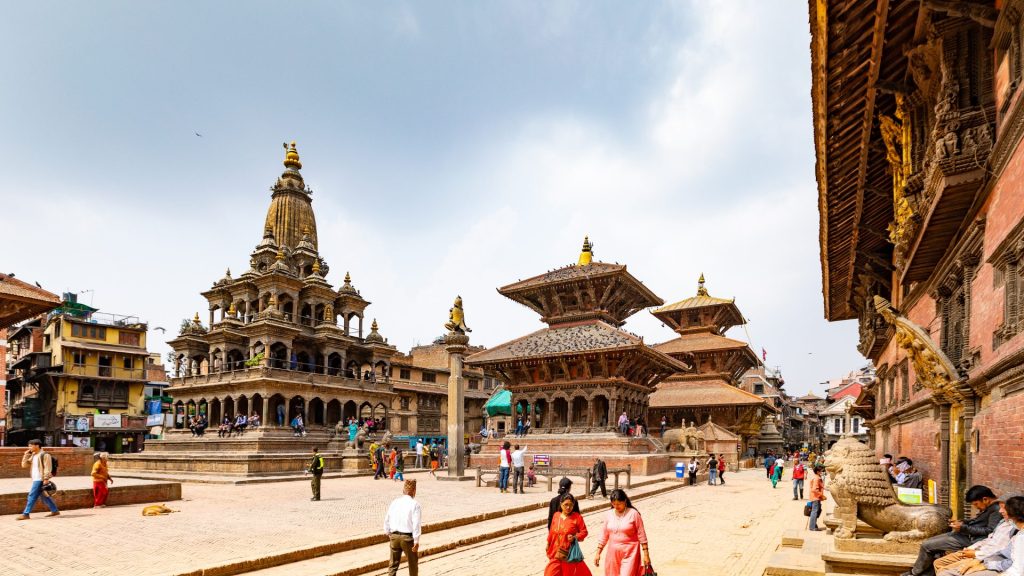
A UNESCO World Heritage Site, Bhaktapur Durbar Square is situated in Bhaktapur, Nepal, about 13 kilometers to the east of Kathmandu. The province is Bagmati. Bhaktapur Durbar Square is located in Asia, specifically at latitude 27.6725° N and longitude 85.4280° E. The square is located along Durbar Square Road in the Taumadhi neighborhood of Bhaktapur Municipality. With several temples, courtyards, and historical monuments, the property is roughly 6.88 hectares (17 acres) in size.
Road in Bhaktapur
A 9.1-kilometer section of the Kathmandu-Bhaktapur Road, which is a part of the Arniko Highway, was recently upgraded from two lanes to four. Daily commuting has greatly improved as a result of this development, with fewer traffic and fuel usage, particularly during peak hours.
. Reports indicate that commuters who previously experienced lengthy waits along the route are already benefiting from the renovation. The route is particularly significant since it is a part of the 72-kilometer Kathmandu Outer Ring route, which is intended to encircle the districts of Bhaktapur, Lalitpur, and Kathmandu.
The goal of this upcoming infrastructure is to move heavy traffic out of inner-city regions and enhance regional connectivity. The improvement has also made traffic safety a priority. Following an analysis of the frequency of accidents in certain areas of the route, recommendations were made for measures such as enhanced speed enforcement.
There are also plans to expand the Suryabinayak-Dhulikhel portion into a six-lane expressway due to the recent spike in traffic flow that followed the opening of the Banepa-Bardibas Highway. Being in a key location along this corridor, Bhaktapur District will gain a great deal as its local road system more seamlessly connects with national and regional roads, improving accessibility and meeting the increasing demand for transportation.
How do I go to Durbar Square in Bhaktapur?
Between Kathmandu and Bhaktapur, buses run regularly. The larger buses drop off at Chyamasingha stop along the route that leaves from Ratnapark bus stand (Ratnapark area near Gantaghar (Watch tower)) and Kathmandu Ring Road, while the smaller buses stop at Kamal Binayak stand in Bhaktapur. Direct buses leave from Kathmandu’s Baagbazaar and typically travel faster because there are fewer stops along the route. It can be a great opportunity to meet locals while traveling, and the drive usually lasts 50 to 60 minutes.
Those who would rather not travel in a crowded car might take a taxi directly from Thamel in Kathmandu to Bhaktapur. Driving enthusiasts must use their own vehicles, such as motorbikes or cars, to go from Kathmandu to Bhaktapur via the Arniko Raj Marg route.
Using the Pathao app, you may reserve a Pathao (car or motorcycle) for a speedy and easy travel. Just get a ride to Bhaktapur by downloading the Pathao app from the Google Play Store. Private transportation from the Ratnapark area to Bhaktapur takes about 20 to 25 minutes, but from the Thamel area it takes more than 30 minutes.
The simplest method of navigation if you’re already close to Bhaktapur is to use Google Maps. You only need to type “Bhaktapur Durbar Square” to get the best route and direction based on where you are.
Some local strangers may approach you and offer to be your guide after you get in Bhaktapur, whether you are traveling alone or with others. While some are professionals, others are scammers who, after speaking with you, want more than NRS 2,000 or even NRS 5,000. Always exercise caution and make sure that your devices, cash, and other possessions are secure.
Bhaktapur’s postal code is 44800.
When one leaves Bhaktapur, where should one go next?
Nagarkot is the second-highest point on the Kathmandu Valley’s rim, standing at 2,175 meters. Visitors can enjoy breath-taking views of Mount Everest and the Himalayas from this location. Twenty kilometers northeast of Bhaktapur is the distance to get there. The area’s Tamang communities can be reached by hiking paths.
In Conclusion
Bhaktapur is the holy city of Nepal. If you are interested in taking a spiritual retreat to this amazing city, we have some tips on how you can get the most out of your trip. Bhaktapur is a diverse and historic city, so there is something for everyone here. Head to the city’s Durbar Square to catch a glimpse of the beautifully preserved architectural achievements from the past. Let us know if you have any questions or concerns.