Comprehensive Guide to Elevation and Altitude on the Annapurna Base Camp Trek

Annapurna Base Camp Trek is one of the most adventure treks in Nepal and it will take you too deep of the Annapurna Region.
Annapurna Base Camp is located at the attitude of 4130 meters (13550 feet) which offers breath taking views of the Annapurna, Annapurna south and Annapurna Sanctuary. Compared to so many other treks like Everest Base Camp and others Annapurna Base Camp Trek is relatively moderate that’s the reason it attracts so many trekkers from beginners to seasoned hikers.
Annapurna Base Camp Trek might be difficult for those who have never been to any of the trek because the elevation increases when you move further ahead. Fluctuations in the elevations can be more challenging to the beginners. But if you remain calm and compose it will be more fun loving and adventurous.
It also offers the magnificent view of alpine meadow, terraced crops and lush woodlands. However it is crucial to take essential preventive because as you go higher the air becomes thinner which can cause altitude sickness to some of the trekkers.
This blog will guide you through the main stages of Annapurna Base Camp and offers a detail study of its elevation.
To understand and make complete planning before going to the Annapurna Trek can be more adventurous and fun so will share some important tips and preparation before going to the trek.
Annapurna Base Camp Trek Elevation Gain
Before going to the Annapurna Base Camp Trek it is important to understand each elevation so that we can prepare accordingly and create memorable and adventurous Trek. Here is breakdown of Annapurna Base Camp Trek elevation gain.
| Day | Start/End point | Starting Elevation(m) | Maximum Elevations(m) | Ending Elevations(m) | Elevation Gain(m) |
| 1 | Kathmandu to Pokhara | 1400 | 1400 | 900 | -500 |
| 2 | Pokhara to Ulleri | 900 | 2020 | 2020 | 1120 |
| 3 | Ulleri to Ghorepani | 2020 | 2840 | 2840 | 820 |
| 4 | Ghorepani to Tadapani | 2840 | 2610 | 2610 | -230 |
| 5 | Tadapani to Sinuwa | 2610 | 2360 | 2360 | -250 |
| 6 | Sinuwa to Deurali | 2360 | 3230 | 3230 | 870 |
| 7 | Deurali to Annapurna Base Camp | 3230 | 4130 | 4130 | |
| 8 | Annapurna Base Camp to Bamboo | 4130 | 2345 | 2345 | -1785 |
| 9 | Bamboo to Jhinu | 2345 | 1780 | 1780 | -565 |
| 10 | Jhinu to Syauli Bazar | 1780 | 1170 | 1170 | -610 |
Pokhara (900m) to Ulleri (2020m)
The actual trek starts from Nayapul which is 41kilometre away from Pokhara. Before beginning the trek, the trekkers passes through Birethanti, a beautiful village at the confluence of the Modi and Bhurungdi rivers. Ulleri is a village which is located at the altitude of 2020metres.
It will be more challenging for the trekkers as the elevation is rise by 1120 meter with a series of stone steps which will be more intense for the trekkers. The day end with beautiful panoramic view of the surrounding and brings more adventure when you go further.
Ulleri to Ghorepani (2840m)
As you leave Ulleri and move further ahead you will trail through the lush forest filled with rhododendron and oak trees. Crossing further in the trail will leads to Ghorepani with elevation gain of 820meters making elevation of 2840meters.

The landscape becomes more enchanting with the view of the Himalaya. As you reached Ghorepani you will be rewarded with the breath taking view of Dhaulagiri and Annapurna South.
Ghorepani to Tadapani (2610m).
Poonhill is the main attraction of the trek as it offers breath taking view of the sunrise Over the Annapurna and Dhaulagiri ranges. The trek continues to Tadapani (2610m) after having breakfast back to Ghorepani.
Ghorepani to Tadapani (2610m)
Poonhill is the main attraction of the trek as it offers breath taking view of the sunrise Over the Annapurna and Dhaulagiri ranges. The trek continues to Tadapani (2610m) after having breakfast back to Ghorepani.
Tadapani to Sinuwa (2360m)
The trail from the Tadapani will lead you to the Chhomrong which is one of the beautiful villages of Annapurna region. It is one of the popular stop for Annapurna Base camp. From Chomrong village you will get to see the breath taking view of Machapuchre (Fishtail) mountain and Annapurna south.
The trail continues with the Chhomrong river leads to sinuwa at the altitude of 2360 metre.Though the elevation is moderate the fluctuation in the elevation can make trekkers to add more days in their trek.
Sinuwa to Deurali (3230m)
The trail from Sinuwa to Deurali can be more challenging for the trekkers. The route climbs to Dovan (2600m) after meandering through the lush rhododendron and bamboo forest before reaching bamboo. As the trekkers move uphill close to the highland they will encounter less populated region. 870metre gain in the elevation brings total elevation to 3230 metre.
Deurali to Annapurna Base Camp (4130 meter)
The Last elevation to Annapurna Base Camp is more challenging and adventurous. The trekkers pass through Machhapuchhre Base Camp which leads to a breath taking views of the surrounding peaks. The elevations from deurali to Annapurna Base Camp gain the total elevation of 900metre which makes 4130metre elevation in total. That leads to a various peaks like Annapurna massif, Annapurna south, Hiunchuli and Machhapuchhre.
Reaching to Annapurna Base Camp will be one of the joyous moments for the trekkers as it offers panoramic views of the mountain. So the trekker’s journey to Annapurna Base Camp will be worth it. It always said that difficult journey leads to a beautiful destination hence it will be proved by Annapurna Base Camp.
Journey Back and Altitude Drop
Trek to Annapurna Base Camp might be slightly difficult however return from Base Camp is significantly easier because of the elevation loss. From Annapurna Base Camp (4130 m) to Jhinu (1780m) there is significant loss which make your body to get more relax and recover more effectively.
The Initial stage redoes the path from Annapurna Base Camp to Bamboo is (2310 m) covering the elevation loss of 1820meters. The route passes through Machhapuchhre Base Camp and Deurali which also offers beautiful and greenery nature that can help to refresh the body.
The trail descends from Jhinu to Bamboo via a mix of gentle uphill climbs and downhill routes, particularly when it approaches Chhomrong 2170metre.
There will be quite good rest for the trekkers as there is a huge elevation loss from Bamboo to Jhinu i.e. 530metre so during that time they can enjoy natural hot spring.
The Trek from Syauli Bazar (1220 m) to Jhinu offers a smooth a decent with a elevation loss of 560 meters. This route passes through a small village covered with terraced farmlands which showcase the lifestyle of the rural area of the region.
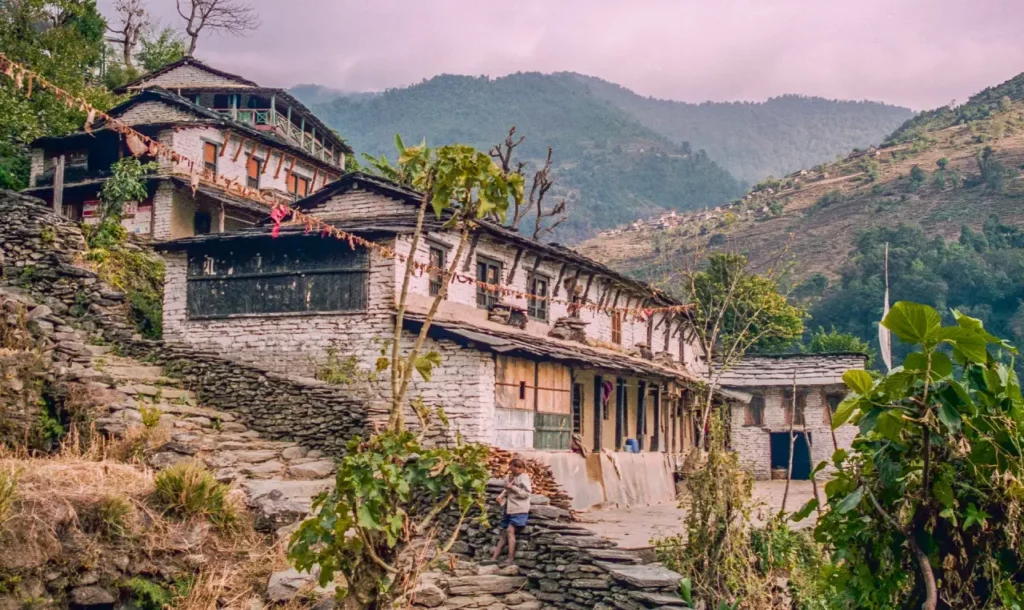
The journey continues along with the Modi Khola River which offers serene and scenic walk. The journey will quite adventurous as the route is easier compared to other high altitude sections.
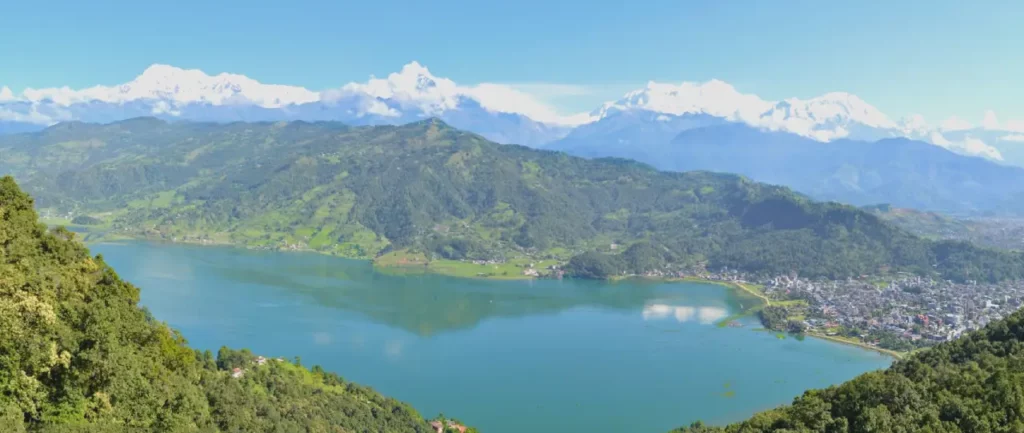
The trekkers will complete their journey from Syaulibazar and return back to Pokhara with lots of memories. Pokhara is a beautiful city surrounded by the Phewa Lake around and the mountain which will be an ideal place for the trekkers to relax and rejuvenate.
Managing Elevation and Gain
During Annapurna Base camp it is very important to manage elevation gain because if you manage it the trek will be more fun and adventurous. On the other hand you can adjust your body according to the elevation. As you ascend it’s better to adopt steady pace because your body may take some time to adjust the elevation.
For some of the trekkers when you ascend up the hill they can have Altitude sickness or Acute Mountain Sickness (AMC) when body does not adapt properly. They can have symptoms like Headaches, Shortness of breath, nausea, dizziness and fatigue.
Compared to other high elevation treks Annapurna Base Camp doesn’t require extended stay at high altitudes which makes it moderate in terms of altitude issues. However the route from Sinuwa to Deurali there is significant growth in elevation so it is important to monitor your condition and take rest in between.
Therefore if the condition is good it’s better to move ahead of the trek but if you fill like AMC then it’s better to descend to lower altitude quickly.
Trekking guide can be very much helpful in such condition as they are very knowledgeable about the altitude sickness so they can suggest what to do and itineraries can be change as per the requirement as well.
Annapurna Base Camp Acclimatization Technique
For the adventurous and memorable trek it’s very to manage the elevation. AS you Ascend it is crucial to take a steady pace so that your body can adjust the altitude changes.
Acclimatization is a process where the individual gradually adapt their condition to new environment usually in the variation of the elevation, temperature or other external conditions. For example during high altitude trekking acclimatization helps body to maintain the oxygen level to reduce the risk of altitude sickness i.e. AMC.
Here are some of the strategies that will help you to acclimatize during Annapurna Base Camp Trek.
- Always give your body enough time to acclimate during elevation gain is key to successful acclimatization.
- During the trek always hydrate and take proper nutrition and water. It is important to drink plenty of water as it helps body to acclimatize faster. Consume High protein snacks and avoid alcohol.
- Take gentle push, listen to your body and take steady pace. If you need more days take it so that you can have fun and adventurous trek.
- Altitude sickness can hit anytime anywhere during the trek though you are physically fit so always take gentle push and understand your Cardiovascular health which helps to maintain the oxygen level.
- If you feel dizziness, headache, and nausea talk to your guide immediately as they are very knowledgeable about the altitude and if things got worse ascend to a lower altitude immediately.
How to prepare for the elevation difficulties of the Annapurna Base Camp Trek
Physical readiness is not only the key for the Annapurna Base Camp trek however you should be mentally ready to overcome the elevation so here are some key factors to take into consideration before taking trek to ABC.
Physical Fitness
Those who haven’t engaged in any forms of the exercise before ABC can be more challenging for the trekkers so before doing ABC trek if you can do activities like running, walking, swimming etc. then you can handle the challenges easily as a result you will have more fun during the trek.
Mental Preparation
Annapurna Base Camp is quite moderate trek compared to other high altitude trek but if you prepared yourself mentally for up and down you will be rewarding with the breath taking views of the mountain and have memorable memory till lifetime.
Altitude Acclimatization
Acclimatization is the most important part of the trek so proper acclimatization is required to avoid altitude sickness. Always hydrated with plenty of water and have nutrition snacks during the trek. Take gentle push and have rest in between the treks.
Gear and packing
Packing right gear is very important for the ABC trek as the temperature is very cold up there. Trekking gear like boots, sleeping bag, warm jacket and water bottle is very much important as you need to hydrate with plenty of water.
Consulting a Guide
For safety trek it is very much important to go through a company as they have got experience guide who can handle every worse scenario easily and it will be more reliable as well. .Anything can happen anytime during the trek so if it does the company will rescue the trekkers immediately. A proper guide will assist you at every step of the trek.
Conclusion
Completing ABC trek will be a life changing experience for the trekkers as it combines physical difficulty, cultural exploration and breath taking Himalayan views.